Description
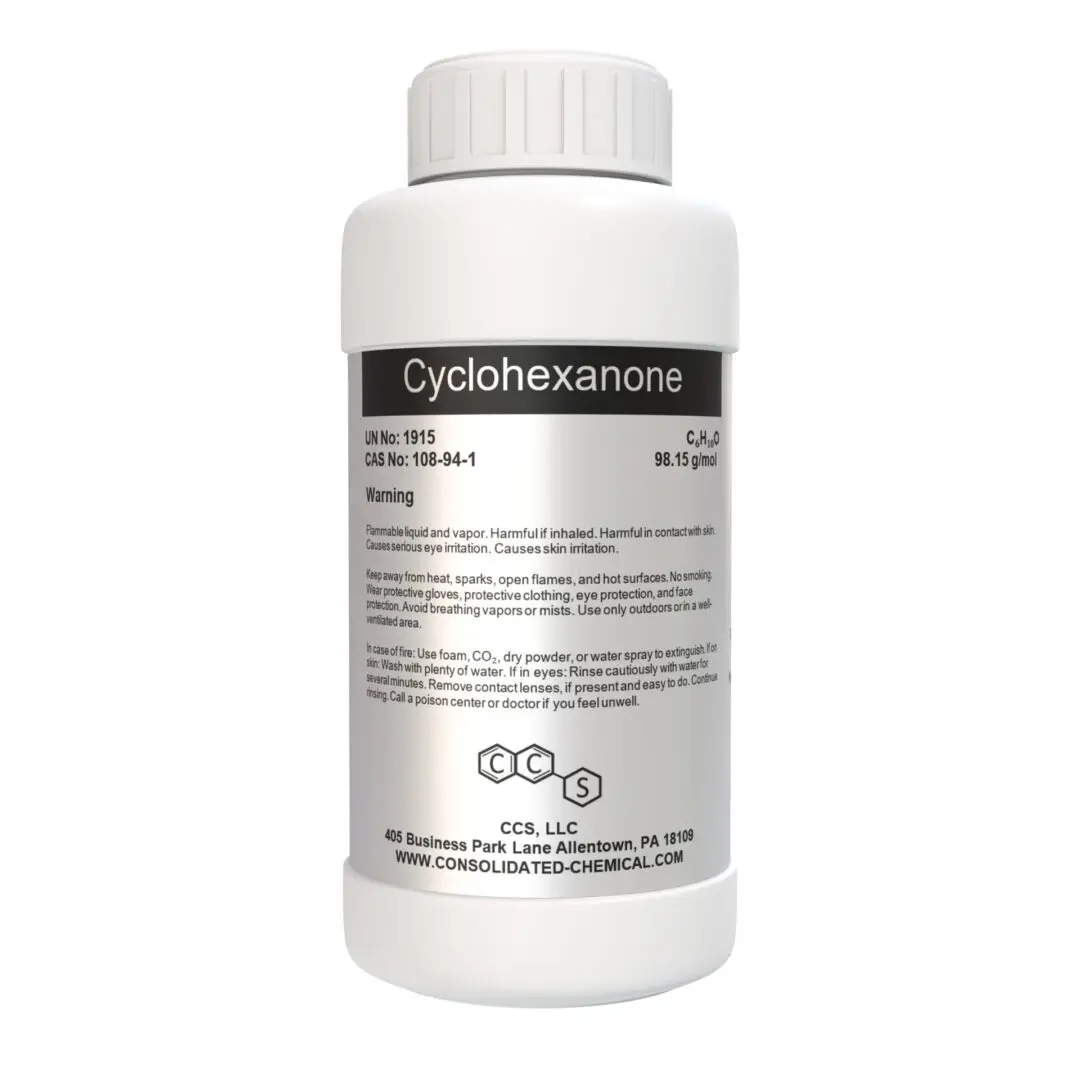
Cyclohexanone is a high-purity, industrial-grade organic solvent widely used in various industries such as chemical manufacturing, pharmaceuticals, paints, coatings, and adhesives. This versatile chemical serves as a critical intermediate for nylon production and is an effective solvent for resins, dyes, and waxes.
General Information:
- Chemical Name: Cyclohexanone
- Chemical Formula: C₆H₁₀O
- CAS Number: 108-94-1
- Molecular Weight: 98.15 g/mol
- EC Number: 203-631-1
Physical Properties:
- Appearance: Clear, colorless to slightly yellow liquid
- Odor: Sweet, acetone-like odor
- Density: 0.946–0.947 g/cm³ at 20°C
- Boiling Point: 155–156°C
- Melting Point: -31°C
- Refractive Index (nD20): 1.450–1.455
- Vapor Pressure: 1.18 kPa at 20°C
- Flash Point: 46°C (closed cup)
- Solubility:
- Miscible with most organic solvents such as alcohol, ether, and acetone
- Slightly soluble in water
Chemical Composition:
- Water Content: ≤0.2% (by Karl Fischer Titration)
- Cyclohexanol Content: ≤0.1%
- Residue on Evaporation: ≤0.01%
Storage Requirements:
- Temperature Control:
Store in a cool, dry, and well-ventilated area, ideally at temperatures between 15°C and 25°C. Avoid exposure to heat, direct sunlight, and open flames.
- Container Specifications:
Use tightly sealed, corrosion-resistant containers such as steel drums or IBC tanks. Ensure containers are clearly labeled and compatible with Cyclohexanone.
- Segregation:
- Keep away from strong oxidizing agents, acids, and bases.
- Avoid storing near ignition sources or flammable materials.
- Store separately from food, drink, and animal feed.
- Spill Containment:
Use secondary containment systems to prevent leaks or spills from spreading.
Handling Precautions:
- Personal Protective Equipment (PPE):
- Gloves: Chemical-resistant gloves (e.g., nitrile or neoprene).
- Eye Protection: Safety goggles or a face shield.
- Clothing: Flame-resistant lab coat or chemical-resistant suit.
- Respiratory Protection: Use an approved respirator in poorly ventilated areas or when handling large quantities.
- Safe Handling Practices:
- Avoid direct contact with the liquid.
- Do not breathe vapors or mists; work in a well-ventilated area.
- Ground and bond containers during transfers to prevent static discharge.
- Use explosion-proof equipment for pumping and handling.
- Hygiene Measures:
- Wash hands thoroughly after handling.
- Remove and wash contaminated clothing before reuse.
- Emergency Preparedness:
- Keep fire extinguishers (foam, CO₂, or dry chemical) nearby.
- Have spill cleanup materials and absorbents readily available.
Disposal Considerations:
Dispose of Cyclohexanone and its containers in accordance with local, regional, and international regulations. Do not pour into drains or the environment.




Reviews
There are no reviews yet.