
No products in the cart.
Description
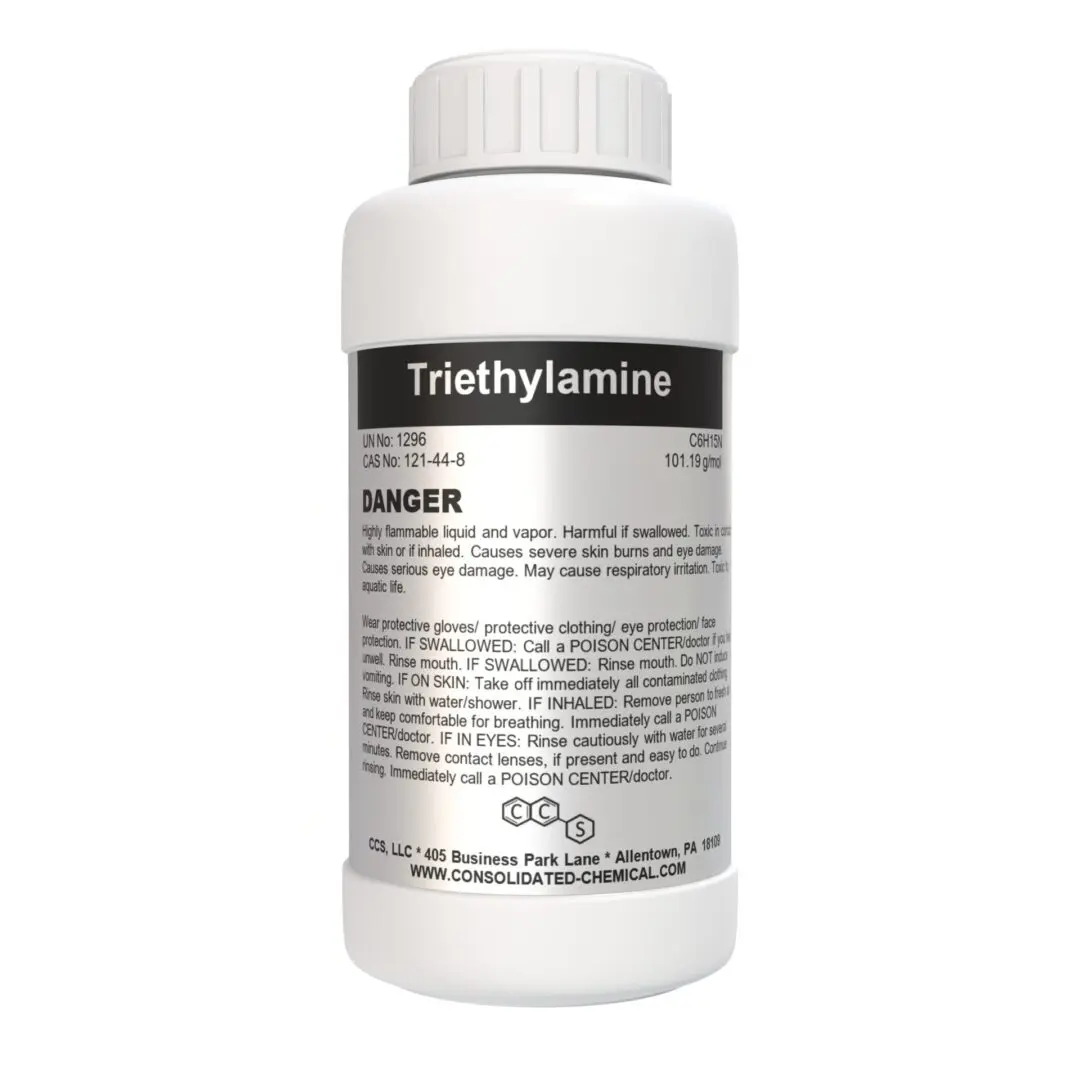
Triethylamine is a high-purity organic solvent and reagent designed for laboratory and industrial applications. Its versatility and efficiency make it a critical component in a wide range of chemical synthesis and manufacturing processes. With exceptional purity and stability, our Triethylamine ensures reliable results in both research and production settings.
Applications of Triethylamine
Chemical Synthesis
- Acid Neutralization: Acts as a strong organic base in chemical reactions.
- Catalyst: Frequently used in esterification, acylation, and transesterification reactions.
- Intermediate: A critical reagent for synthesizing esters, amides, and other nitrogen-containing compounds.
Pharmaceutical Industry
- Active Pharmaceutical Ingredients (API): Key role in synthesizing drugs and intermediates.
- Quaternary Ammonium Salts: Used to produce these compounds, which are essential in medicinal chemistry.
- Buffer Agent: Maintains pH stability during pharmaceutical processes.
Agrochemical Industry
- Pesticides: Intermediate in manufacturing herbicides, fungicides, and insecticides.
- Fertilizer Production: Contributes to nitrogen-based fertilizer synthesis.
Polymer Industry
- Polymerization Catalyst: Aids in the production of polycarbonates and epoxies.
- Resin Curing: Acts as a hardener or curing agent in resin formulations.
Laboratory Applications
- Chromatography: Additive for mobile phases in high-performance liquid chromatography (HPLC).
- Buffer Solutions: Ensures stable pH levels for experiments and reactions.
- Neutralizing Agent: Neutralizes acidic residues during synthesis.
Coatings and Paints
- Corrosion Inhibitor: Enhances the durability of anti-corrosive coatings.
- Stabilizer: Improves the stability of paint and coating formulations.
Textile Industry
- Dye Fixation: Facilitates the bonding of dyes to textiles.
- Processing Aid: Adjusts pH during fabric treatment and finishing processes.
Chemical Information:
- Chemical Name: Triethylamine
- Molecular Formula: C6H15N
- Molecular Weight: 101.19 g/mol
- CAS Number: 121-44-8
Physical Properties:
- Appearance: Clear, colorless liquid
- Odor: Strong, ammonia-like odor
- Boiling Point: ~89°C (192°F)
- Melting Point: ~-114°C (-173°F)
- Density: ~0.726 g/cm³ at 20°C (68°F)
- Refractive Index: 1.400–1.405 at 20°C
- Vapor Pressure: ~57 mmHg at 20°C (volatile)
- Solubility:
- Miscible with water, ethanol, acetone, and most organic solvents
Chemical Properties:
- pH: Strongly basic (aqueous solutions)
- Flash Point: -11°C (12°F), closed cup (highly flammable)
- Autoignition Temperature: ~215°C (419°F)
- Explosive Limits: 1.2%–8.0% (volume in air)




Reviews
There are no reviews yet.