Description
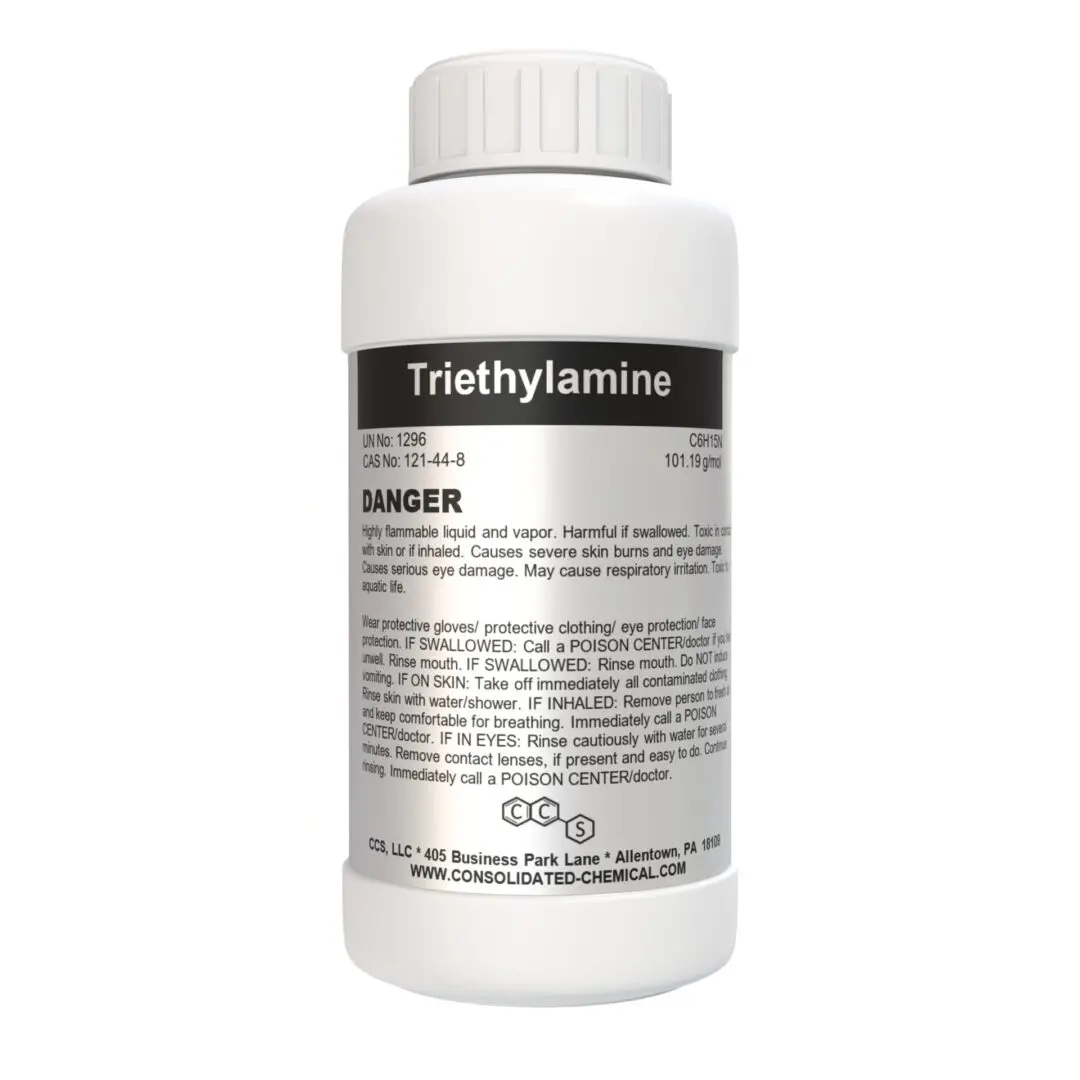
Triethylamine is a high-purity organic solvent and reagent designed for laboratory and industrial applications. Its versatility and efficiency make it a critical component in a wide range of chemical synthesis and manufacturing processes. With exceptional purity and stability, our Triethylamine ensures reliable results in both research and production settings.
Applications of Triethylamine
Chemical Synthesis
- Acid Neutralization: Acts as a strong organic base in chemical reactions.
- Catalyst: Frequently used in esterification, acylation, and transesterification reactions.
- Intermediate: A critical reagent for synthesizing esters, amides, and other nitrogen-containing compounds.
Pharmaceutical Industry
- Active Pharmaceutical Ingredients (API): Key role in synthesizing drugs and intermediates.
- Quaternary Ammonium Salts: Used to produce these compounds, which are essential in medicinal chemistry.
- Buffer Agent: Maintains pH stability during pharmaceutical processes.
Agrochemical Industry
- Pesticides: Intermediate in manufacturing herbicides, fungicides, and insecticides.
- Fertilizer Production: Contributes to nitrogen-based fertilizer synthesis.
Polymer Industry
- Polymerization Catalyst: Aids in the production of polycarbonates and epoxies.
- Resin Curing: Acts as a hardener or curing agent in resin formulations.
Laboratory Applications
- Chromatography: Additive for mobile phases in high-performance liquid chromatography (HPLC).
- Buffer Solutions: Ensures stable pH levels for experiments and reactions.
- Neutralizing Agent: Neutralizes acidic residues during synthesis.
Coatings and Paints
- Corrosion Inhibitor: Enhances the durability of anti-corrosive coatings.
- Stabilizer: Improves the stability of paint and coating formulations.
Textile Industry
- Dye Fixation: Facilitates the bonding of dyes to textiles.
- Processing Aid: Adjusts pH during fabric treatment and finishing processes.
Fuel and Energy
- Fuel Additive: Stabilizes fuel mixtures for better combustion.
- Battery Manufacturing: Used in specific battery electrolyte formulations.
Rubber and Plastics
- Elastomer Production: Acts as a vulcanization catalyst for rubber products.
- Plastic Stabilizer: Enhances the physical properties of certain plastics.
Perfumes and Flavors
- Fragrance Synthesis: Assists in producing aromatic compounds for perfumes.
- Flavor Compounds: Intermediate in creating food-safe flavors.
Environmental Applications
- Air Scrubbing: Neutralizes acidic gases in industrial air treatment systems.
- Wastewater Treatment: Neutralizes and treats acidic waste streams.
Food and Beverage
- Processing Aid: Used sparingly in pH adjustments and specific food-grade formulations.
Education
- Research and Teaching: Used as a reagent in academic laboratories for teaching organic chemistry.
Storage:
- Temperature:
- Store in a cool, dry, and well-ventilated area, ideally below 25°C (77°F).
- Protect from direct sunlight and sources of heat to prevent vapor buildup.
- Containers:
- Store in tightly sealed, corrosion-resistant containers made of stainless steel or specific plastics compatible with amines.
- Avoid using containers made from materials that can react with amines.
- Environment:
- Keep away from oxidizing agents, acids, and sources of ignition.
- Store in a designated flammable liquid storage area.
- Ventilation:
- Ensure adequate ventilation to prevent accumulation of vapors, which can be flammable and harmful if inhaled.
- Secondary Containment:
- Use spill containment measures such as trays or dikes to prevent accidental release.
Handling:
- Personal Protective Equipment (PPE):
- Eye Protection: Wear chemical splash goggles or a face shield.
- Skin Protection: Use chemical-resistant gloves (e.g., nitrile or neoprene) and protective clothing.
- Respiratory Protection: Use a respirator with filters for organic vapors if working in areas with insufficient ventilation.
- Ventilation:
- Handle in a fume hood or a well-ventilated area to minimize exposure to vapors.
- Safe Practices:
- Avoid inhalation, ingestion, and skin or eye contact.
- Ground and bond containers during transfer to prevent static discharge.
- Do not eat, drink, or smoke while handling the chemical.
- Mixing:
- Add Triethylamine carefully when mixing with other chemicals, as it can react violently with oxidizing agents or acids.
Spill and Leak Management:
- Small Spills:
- Absorb with an inert material such as sand or vermiculite.
- Place the waste in a sealed, labeled container for proper disposal.
- Large Spills:
- Evacuate the area and restrict access.
- Use appropriate PPE and contain the spill to prevent environmental contamination.
- Ensure ventilation and eliminate all ignition sources.
Disposal:
- Dispose of Triethylamine and any contaminated materials in compliance with local, state, and federal regulations.
- Do not dispose of it down drains or into the environment.






Reviews
There are no reviews yet.